Sonaur: Building a Generative Music System From Scratch
One morning walk. One Brian Eno interview. One sentence into my Notes app:
“A digital art project — like a zen garden — where ambient tones are meant to exist in the moment of creation, not be recorded and replayed.”
That sentence wasn't scoped or practical. It was a creative compulsion. I got to follow it all the way — as the designer, developer, composer, and product lead — from a single idea to a living iOS app used by listeners around the world.
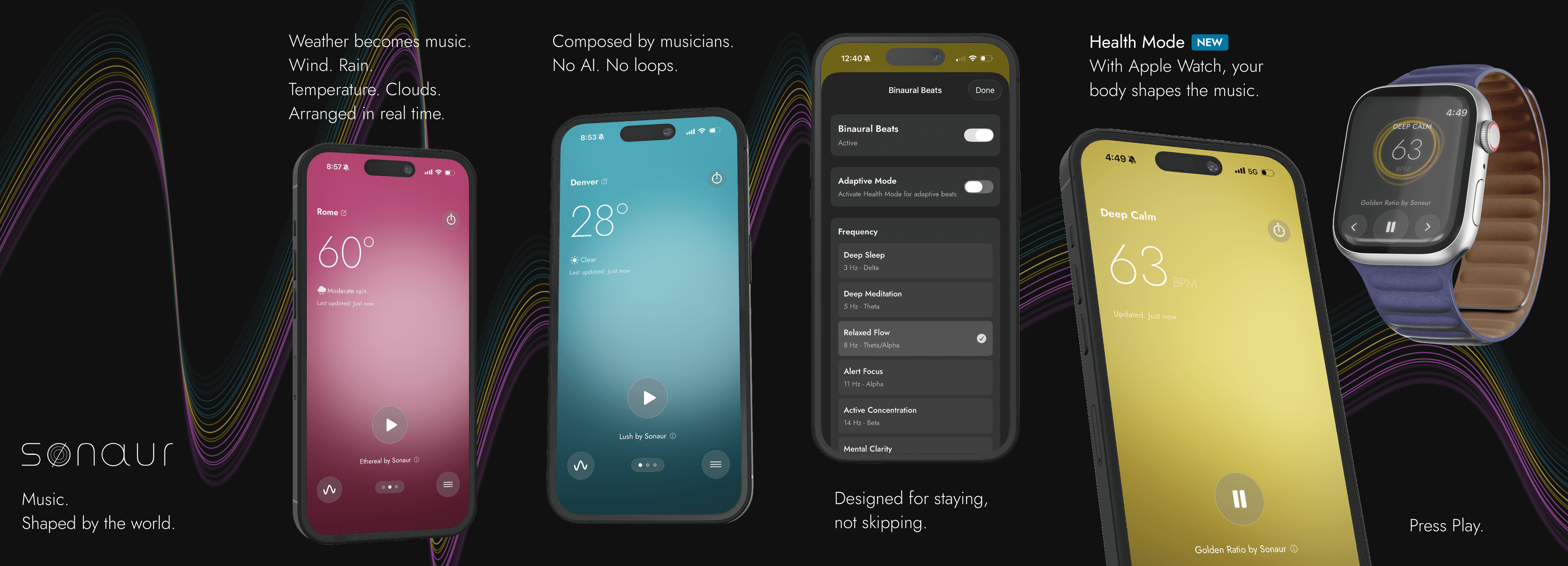
Development Timeline
Concept & Composition
First sonic palette composed and recorded. Tone.js web prototype built. The idea starts making sound.
First Signal
Web prototype shared publicly with survey. Listeners respond. A critical insight emerges: silence feels broken. The foundation layer architecture is born.
Native iOS
Audio engine rebuilt in AVFoundation. Interface stripped to its bare minimum. Designed to disappear the moment you press play.
Launch
v1.0 live on the App Store. One person. Three months.
Health Mode (v1.5)
Apple Watch companion app. Live heart rate streamed via WCSession. Your body becomes the wind.
Concept & Composition
First sonic palette composed and recorded. Tone.js web prototype built. The idea starts making sound.
First Signal
Web prototype shared publicly with survey. Listeners respond. A critical insight emerges: silence feels broken. The foundation layer architecture is born.
Native iOS
Audio engine rebuilt in AVFoundation. Interface stripped to its bare minimum. Designed to disappear the moment you press play.
Launch
v1.0 live on the App Store. One person. Three months.
Health Mode (v1.5)
Apple Watch companion app. Live heart rate streamed via WCSession. Your body becomes the wind.
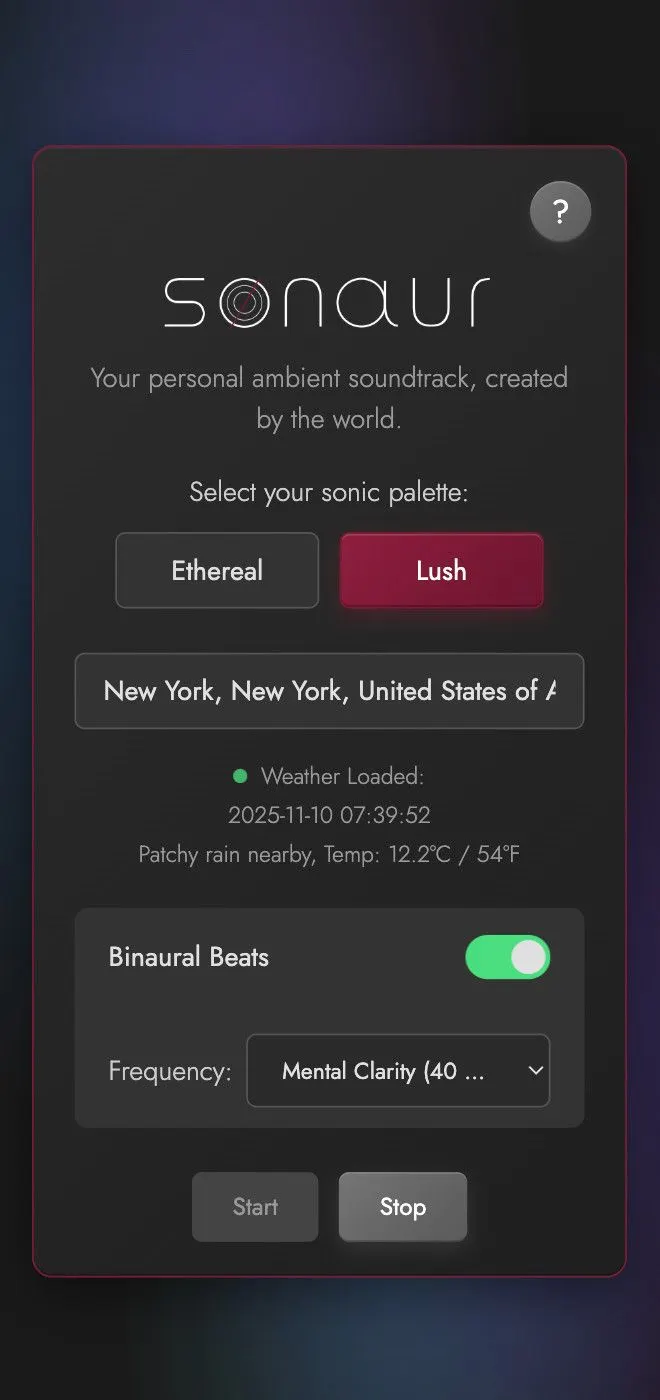
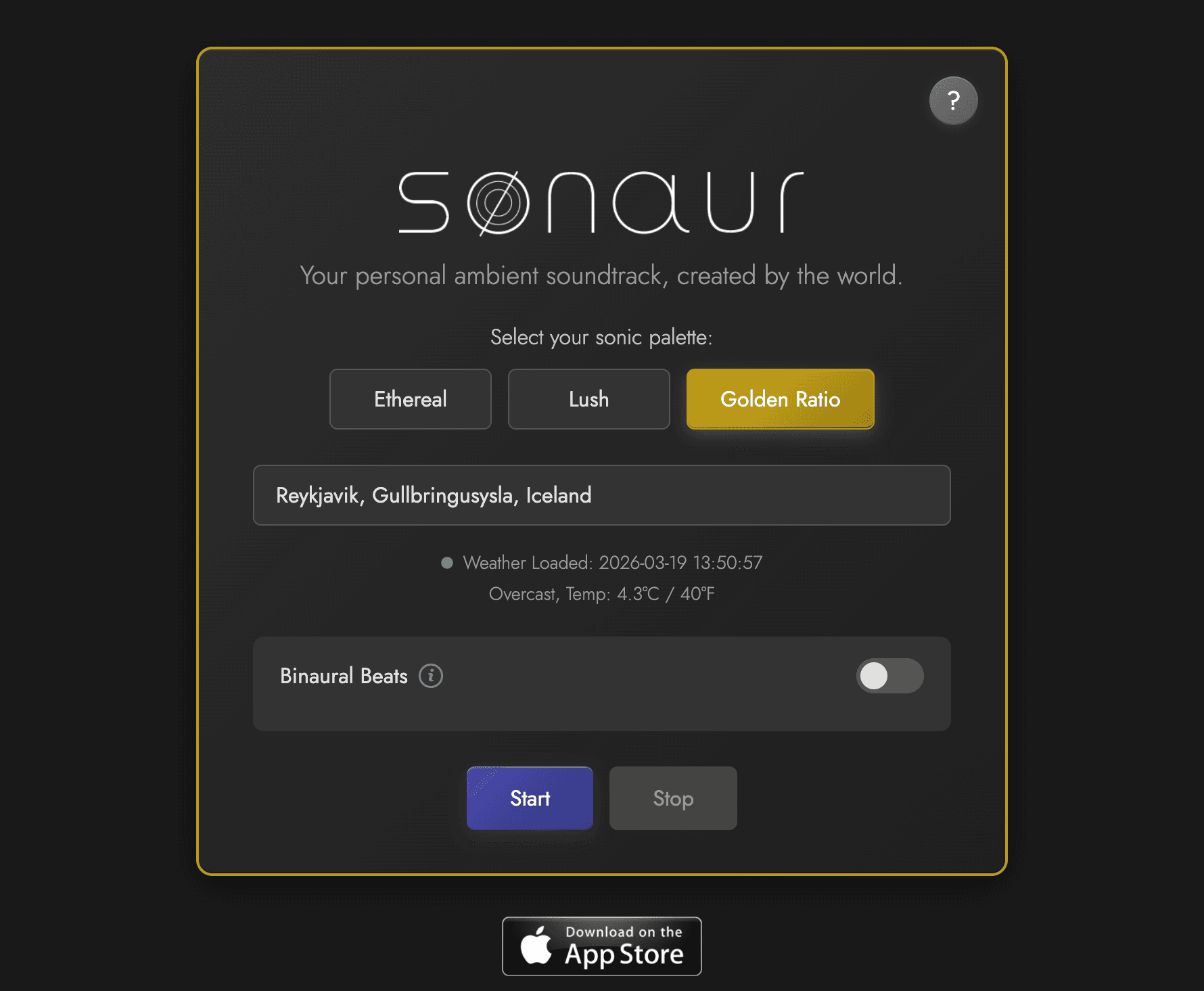
The original web prototype — built with Tone.js, shared publicly to validate the idea. Try it at sonaur.app
The Design Challenge
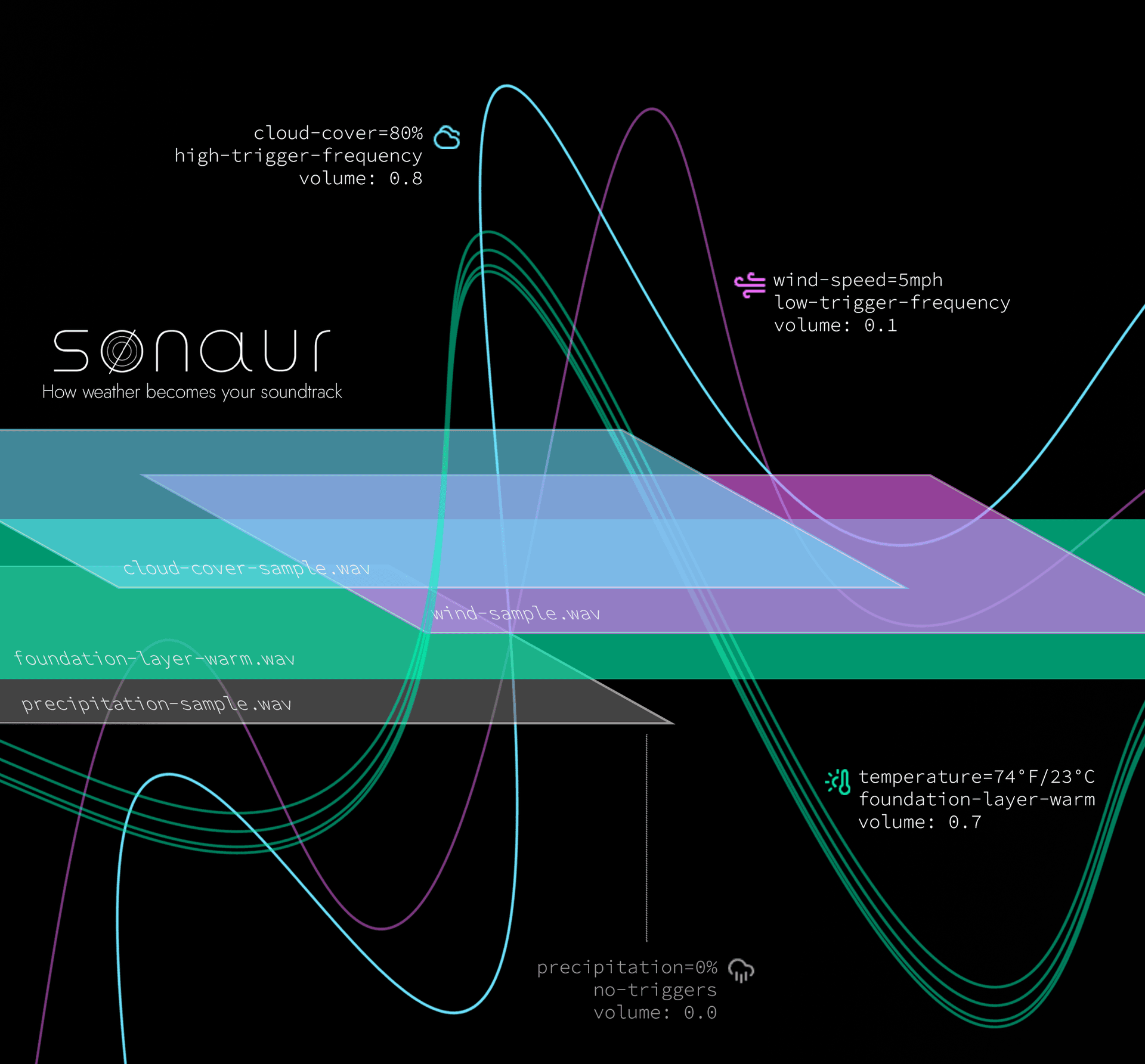
The founding metaphor came directly from Eno: data is the wind, samples are the chimes. Each chime has a fixed pitch. What changes is the wind — when it blows, how hard, how often. You can't say a composer authored a specific performance. Only that they built the system from which it emerged.
That's Sonaur. The design challenge was building a system that could feel genuinely alive — responsive, non-repeating, human in its texture — while asking almost nothing of the listener. No playlist. No skip button. No decisions. Just sound that reflects the world you're already in.
Key Design Decisions
Designing for Disappearance
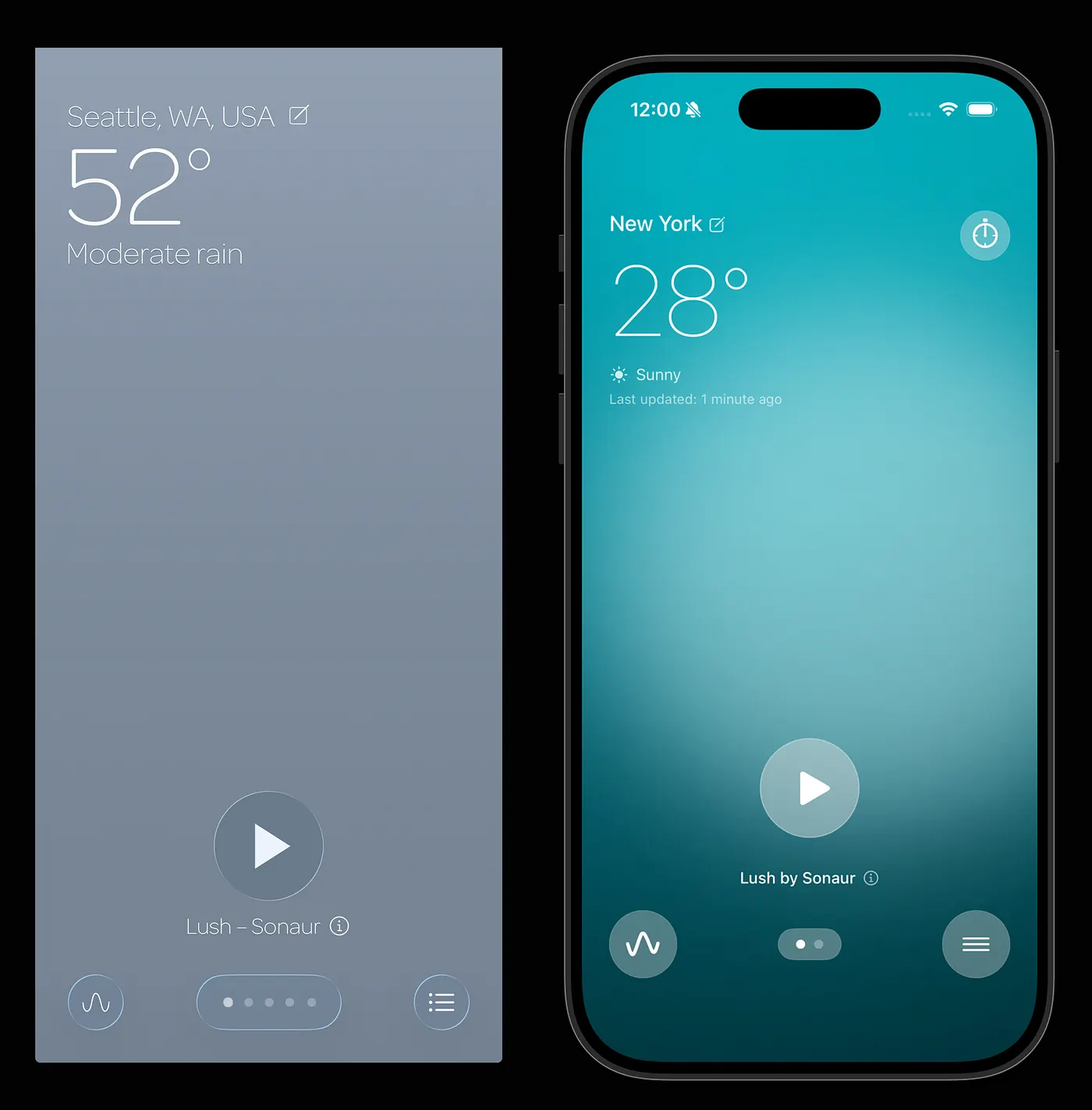
After successfully launching the proof of concept, it was time to adapt the highly functional interface into something more elegant. The iOS interface had one job: get out of the way. The iOS Weather app became an unexpected reference — not visually as much as gesturally. Swiping between locations feels intuitive and tactile. That interaction became the model for moving between sonic palettes.
Familiar enough to require no instruction. Subtle enough to forget it's there. The goal was an interface that felt inevitable — something you'd use without having to think about.
The Foundation Layer
The most consequential design decision came from the listeners. Early feedback from the web prototype kept surfacing the same thing: “I thought it was broken at first.” The system allowed for silence — musically intentional, experientially broken. Any moment that pulled a listener out of presence broke the spell.
The fix wasn't a patch. It was a new architectural standard. A second palette, “Lush,” was built around continuous ambient foundation layers that maintained the soundscape between events. After launching Lush, the data confirmed what I had sensed as well: listeners stayed with Lush nearly 10x longer than the original Ethereal palette.
Ethereal was recomposed from scratch to match the new sonic architecture. Every palette now follows the same structure: 4 foundation layers + 6 event samples. It's the standard every future collaborating artist will use to compose additional sonic palettes.
Reflection, Not Entrainment
I made the deliberate choice not to guide listeners toward a predetermined state. Sonaur mirrors the moment listeners are already in — it doesn't manufacture one. That distinction shaped everything from palette composition to the Health Mode interaction model.
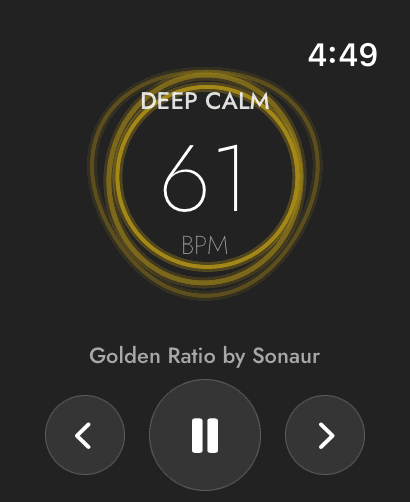
The Heart Rate Zone Formula
Health Mode introduced a new design problem: how do you effectively use the 10-sample architecture while accurately categorizing biometric states across listeners with vastly different fitness levels? Passive Watch heart rate streaming is too sporadic and unreliable for real-time audio. The solution was a companion app that streams live data via a mindfulness workout session over WCSession — and a custom baseline formula:
Awake Baseline = max(RHR x 1.10, RHR + 10)
The absolute 10 BPM buffer ensures high-fitness users with naturally low resting heart rates aren't miscategorized. Four zones — Deep Calm, Present, Engaged, Activated — emerge from that baseline.
The soundscape shifts with you, not ahead of you.
Coda: The Web App, Revisited
The original web prototype did its job. It proved the concept, generated the feedback that drove the foundation layer decision, and launched the iOS app. But sitting next to what Sonaur had become on iOS, it felt like a form — a configuration screen asking listeners to make decisions before they'd heard a single note.
The redesign starts differently. Full-screen visualization driven by live weather data. Minimal chrome. Nothing between the listener and the experience.
Before
After
The philosophy is the same one that shaped every iOS decision: the interface should disappear. This redesign also made Sonaur installable as a web app, giving Android listeners and anyone avoiding the App Store a near-native experience from their home screen.
By the Numbers
The AI Partnership
Sonaur is a case study in the Product Pairs methodology. Using Claude Code as my development partner, I got to ship a native iOS app with a companion Apple Watch experience, a custom audio engine, HealthKit integration, and Firebase analytics — in three months, solo.
This wasn't vibe coding. Every architectural decision was intentional. Claude Code handled implementation velocity. I handled the vision, the taste, and every judgment call that mattered.
One human + AI partner = an entire product team.
Lessons Learned
The discipline wasn't ignoring process — it was knowing when to use it. Survey feedback from the prototype drove the foundation layer decision. A professional QA tester hardened v1.0. Over 50 beta users validated Health Mode before public release. Research informed the work. But taste set the bar everything had to clear.
The biggest constraint wasn't the tech or the timeline. It was holding the standard. When you're the designer, developer, composer, and product lead, compromises are easy — nobody else would notice. The discipline was refusing to. Every palette had to earn an hour of someone's time. Every interaction had to feel inevitable, not just functional.
That's not pressure. That's the whole point of getting to do this.
Sonaur listeners — the people who come back daily and stay for an hour or more — aren't just users. They're fans. That didn't happen by accident. It happened because every decision prioritized the user experience over the feature list, the feeling over the function. That's the same principle behind every team I've built and every product I've helped shape. Great design is done with intention. It doesn't just solve problems. It creates loyalty.
What's Next
Sonaur is a platform for generative sonic art. The next phase opens it to collaborating musicians — independent artists who compose original palettes that live inside the Sonaur system, shaped by data, distributed globally.
The wind chime gets bigger. The chimes belong to more artists.